
The training course “Participatory Budgeting: From Needs to Analytics”, which the Center for Fiscal Policy Research conducts in partnership with the Ukrainian Catholic University, is coming to an end. After the online session, which took place in the second half of April, the participants had the opportunity to spend three intense days in Lviv. This is 72 hours of intensive offline training in a circle of like-minded people who are ready to implement their projects for the benefit of local communities.
Day one: from theory to practice
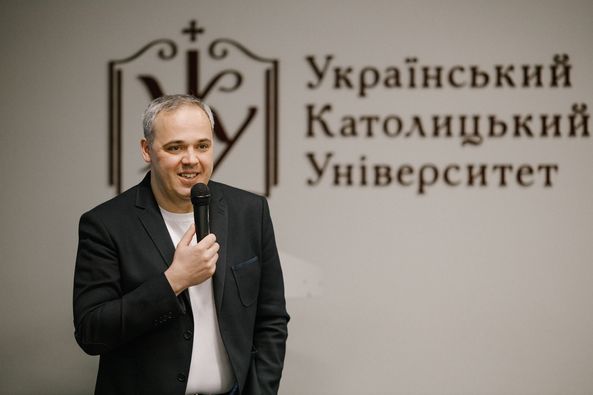
Lectures were delivered by Viktor Maziarchuk, Chairman of the Board of the Center for Fiscal Policy Research, and Andriy Pelekhaty, Deputy Mayor of Pustomyty City Council.
Mr. Maziarchuk focused on the key aspects of working with the budget, including preparing applications for funding and finding appropriate resources. He also introduced the students to the E-data, Spending, and Boost tools that help prepare high-quality project proposals.
“The course has formed a fantastic group of 20 participants from all over Ukraine: representatives of the public sector, local governments, and local deputies. We are working here to combine these areas so that they can jointly seek funding for better project implementation,” said Maziarchuk.
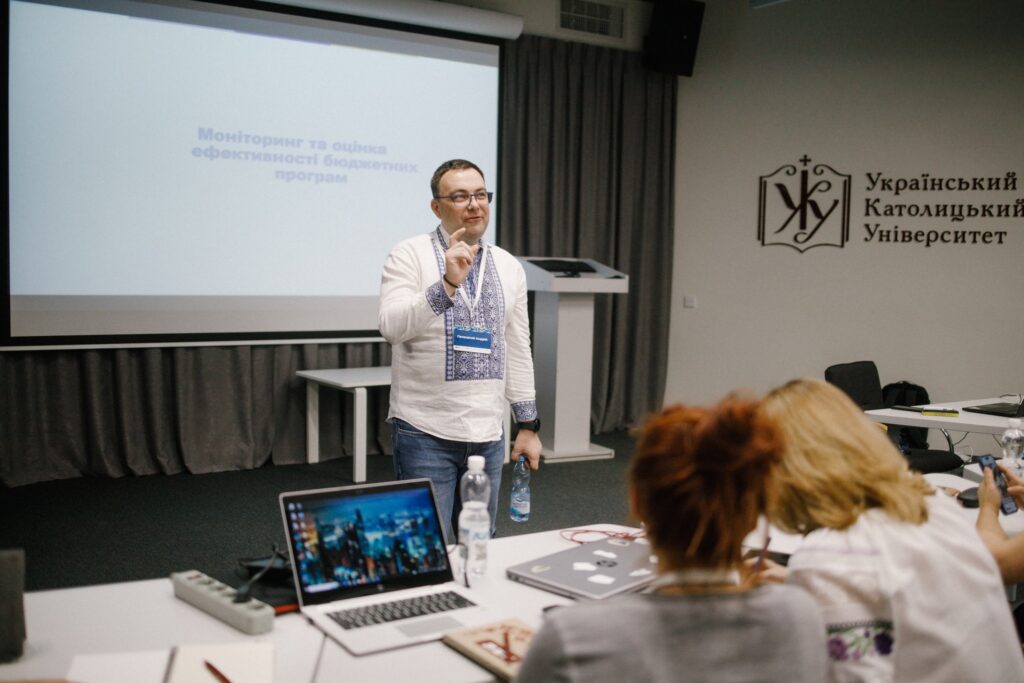
Andriy Pelekhaty shared his practical experience in using the results of community needs analysis for planning and allocating budget resources. He spoke about specific methods that help optimize budget expenditures and ensure their effective use.
“Representatives of communities, non-governmental organizations, and businesses gained knowledge and understanding of what they need to do and in what areas to work in order to raise funds, to use their own financial resources more efficiently, and to ensure that the development of their territorial communities is truly effective, without the so-called “gray zones,” said Andriy Pelekhaty.


Day two: financing and communications
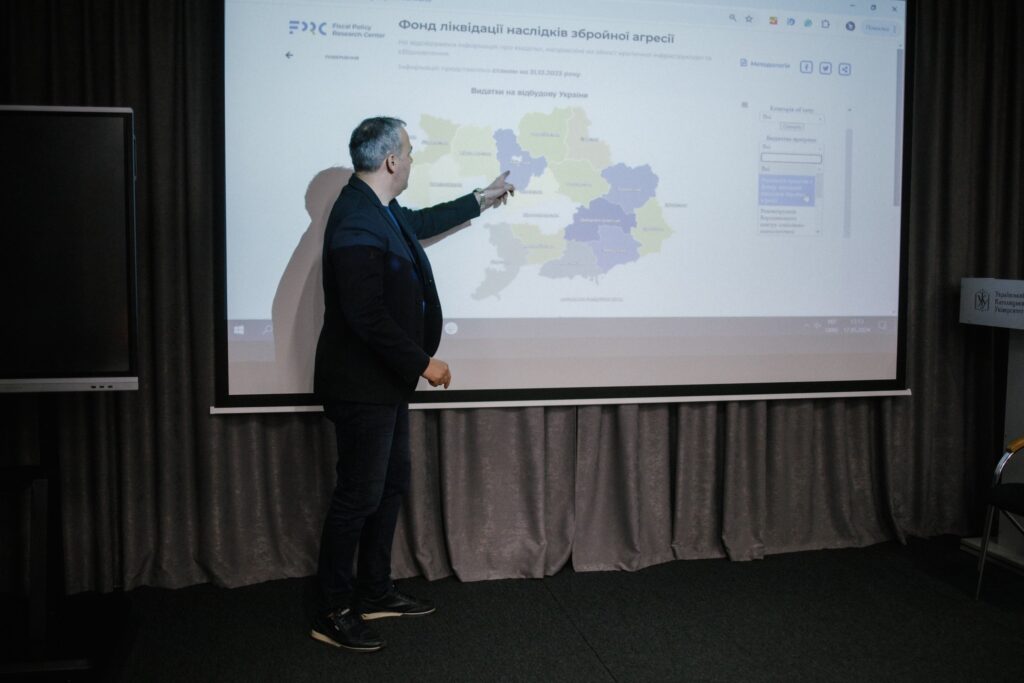
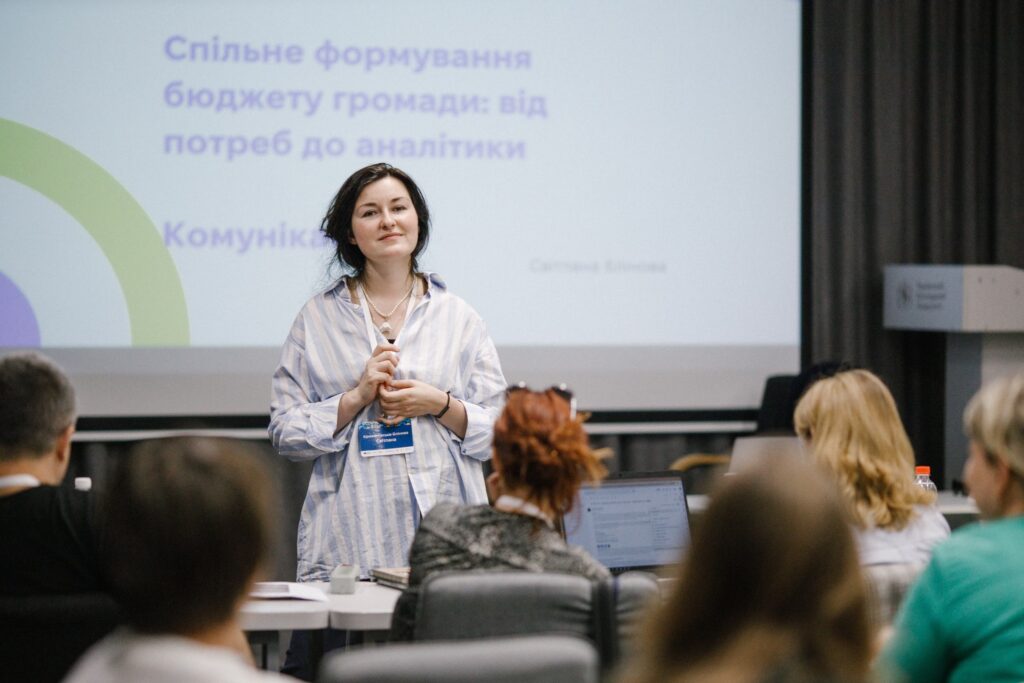
On the second day of the training, Viktor Maziarchuk and Svitlana Kryzhanivska-Blinova spoke about the specifics of financing recovery and communication as a superpower.
“During the lectures, we worked on specific projects and, importantly, with the practical tools that the state now offers in the field of data openness, such as E-data and Open budget,” emphasized Maziarchuk.
Svitlana Kryzhanivska-Blinova emphasized the importance of communication with the community at all stages of project implementation. “We talked about communication as a superpower that allows us to learn from the community about their perception of projects. If you don’t ask people if they need this project and don’t communicate all the stages, they can make up their minds, devalue and easily criticize the processes,” she said.
The guest speaker of the course was Natalia Slysh, Director of the Reform Support Office at the Ministry of Finance. She shared her experience of building a successful team and spoke about 22 lessons of transformation that helped to effectively support reforms. Her story inspired the participants to create their own reform offices.


Day three: ethics and advocacy
The third and final day of the offline session was devoted to ethics and advocacy. Natalia Yakymets, Deputy Director for Research at the International Institute of Ethics and Contemporary Issues, spoke about ethical standards in management decision-making.
“The importance of this topic is dictated by our reality today. We live in a time when we cannot refer only to instructions or prescribed laws. Ethics lies in the plane between our personal beliefs and legal normativity,” she emphasized.
Oleksiy Kovalenko, national expert of the Council of Europe, taught the course participants how to develop advocacy strategies to promote the wishes of citizens in budgeting.
“Budget advocacy based on community needs and analytics is the quintessence and the highest level of advocacy processes, as it requires extensive practical knowledge and skills, and most importantly, awareness of new technologies and approaches to budget-related decision-making. This course is unique, as there has never been such a practical approach in Ukraine before,” he emphasized.
Until June 30, 2024, the course participants will formulate their project proposals with mentoring support, applying the acquired knowledge in practice.



The course is organized by the Fiscal Policy Research Center, Ukrainian Catholic University, together with the Institute of Leadership and Management of UCU, School of Public Management UCU. The activities are co-financed by the Act to Support the Phoenix Project Acceleration Program, implemented by the East Europe Foundation at the expense of the European Union in Ukraine.